Santa Teresa is the wave that ruins other beach breaks for you. Strung along the wild southwestern tip of the Nicoya Peninsula, it's a run of powerful, sand-bottom peaks that break for miles and, crucially, on any tide — which means you can surf all day here instead of chasing a two-hour window. Add the neighboring mellow of Playa Hermosa to the north, the consistency of Playa Carmen at the town's center, and the fishing-village calm of Mal País to the south, and you have one of the most complete, most-surfed zones in the country. This six-day immersion is tagged amber (🟡) purely for the getting-there: a ferry crossing and a lot of dust.
Why immerse rather than camp-package: Santa Teresa's whole appeal is that the peaks stretch for kilometers and each corner has its own personality and tide preference. With your own mid 4x4 you drift the strand — Hermosa's forgiving rollers when you want volume, Carmen's rippable A-frames when you want performance, Santa Teresa's power when it's on, Mal País when you want space — instead of surfing whatever's in front of the camp. The town has serious surf infrastructure (board shapers, shops like House of Somos, coaches), but the waves reward mobility.
Dry season (Dec–Apr) brings offshore mornings, cleaner faces, and the NW swells locals love out front; the green season (May–Nov) delivers the bigger, more powerful SW groundswell and thinner crowds for surfers comfortable with more water moving. Either way this is a punchy zone — improvers should treat Hermosa and small Carmen as the training ground before taking on Santa Teresa at size.
Day-by-day
Day 1 — LIR → Puntarenas → Paquera ferry → Santa Teresa (long transit day). Drive to Puntarenas and take the Puntarenas–Paquera car ferry (~1 hr 20 min crossing; roughly 4–6 sailings daily; small per-passenger + vehicle fee — verify the current schedule and price, and arrive early in high season to guarantee a spot). From Paquera it's a scenic 1.5–2 hr grind on part-paved, part-rough road to Santa Teresa. Settle in, sunset check at Playa Carmen. Total door-to-door often 5–5.5 hr — the ferry schedule drives your departure.
Day 2 — Playa Carmen (find your feet). Playa Carmen sits at the town's heart: a very consistent sand-bottom beach break with multiple peaks, working best on a SW swell and mid-to-high tide, rideable essentially year-round. It's the ideal orientation wave — beginners take lessons here, intermediates find rippable walls. Dawn session for the offshore, midday for boards and coffee, evening glass-off. Sleep central.
Day 3 — Santa Teresa (the main event). Playa Santa Teresa proper is the powerful, long-riding beach break the town is famous for — and it works on any tide, so build the day around wind, not water height: dawn for offshore cleanliness, sunset for the ritual crowd-on-the-sand session. It's a step up in power from Carmen; pick your peak and your size honestly.
Day 4 — Playa Hermosa (north) + skills. Drive north to Playa Hermosa (the Santa Teresa one, not Jacó's) — rolling, forgiving waves along the whole beach, the zone's best beginner-and-longboard option and a mellow reset day. Uncrowded peaks up and down the strand. Good day for a coached session or video if you want to sharpen before the bigger days.
Day 5 — Mal País (space) + a guided secret. South to Mal País, the original fishing-village end, quieter and more local, with sand-and-reef peaks and a slower scene. This is also the day to book a local surf tour to one of the unnamed peaks the shops won't publish, if the swell's worth it. Tide-check before you commit — some Mal País corners are shallow at low water.
Day 6 — Dawn session → Paquera ferry → LIR. One last surf at your favorite peak, then reverse the transit: rough road to Paquera, the ferry, and the paved run to Liberia. Book the ferry time backward from your flight and buffer generously — a missed sailing can cost you hours.
The breaks
- Playa Carmen — very consistent sand-bottom beach break, multiple peaks, SW swell + mid-to-high tide, year-round. All levels by size.
- Santa Teresa — powerful, long-riding beach break that works on all tides; the signature wave. Improver to advanced by size.
- Playa Hermosa (Santa Teresa) — rolling, forgiving beach break, uncrowded, ideal for beginners and longboarders. Beginner to intermediate.
- Mal País — quieter sand-and-reef peaks, more local, more space; some corners shallow at low tide. Intermediate to advanced.
Where to stay
Santa Teresa/Playa Carmen has the densest lodging — surf hostels, boutique lodges, and beachfront rentals — and the best board access (rent, buy, or get a custom shaped in town). Mal País is quieter and more local for those wanting calm. A self-contained rig is excellent here given the dusty spread-out layout; confirm rooftop-tent site security and legality locally. Book ahead in dry-season peak.
Surf logistics
- Season / swell: Dec–Apr = offshore mornings, cleaner waves, dry-season NW swells out front. May–Nov = bigger SW power and fewer people. This is a punchy coast year-round.
- Boards: Your everyday shortboard plus a step-up for the bigger Santa Teresa days; a longboard/mid-length shines at Hermosa. Town has full board infrastructure if you need to add to the quiver.
- Tides: Carmen favors mid-to-high; Santa Teresa is all-tide (surf by wind); mind shallow Mal País corners at low.
- Hazards: Powerful beach-break currents and the occasional shallow reef corner at Mal País — reef awareness on lower tides. Dusty, rutted local roads (mud in green season).
- Ferry / boat access: The Puntarenas–Paquera car ferry is the gateway — verify the current timetable and fare, arrive early in peak season, and plan both directions around it.
- 4x4 need / connectivity: Mid 4x4 for the Paquera–Santa Teresa road and in-town dirt. Good data in town, patchy on the ferry road.
- Respect / localism: Friendly but real surf community; observe lineup etiquette, especially at the more local Mal País peaks.
- Tag: 🟡 mostly through-land — ferry crossing plus dusty/rough roads to and within the zone.
Insider tips
- Plan the whole trip around the ferry both ways. Check the sailing schedule first, book departure and return backward from it, and arrive at the dock early in high season.
- Surf Santa Teresa by the wind, not the tide — it breaks on all tides, so chase the offshore dawn and the sunset glass-off.
- Use Carmen and Hermosa to warm up before Santa Teresa at size. The power step-up is real.
- Fuel and cash in town before wandering — the peninsula's south end is thin on both.
- Ask the shops about the unnamed peaks. A guided session on the right swell is the difference between a good trip and a great one — and keeps you out of a crowded lineup.
Reserve your rig
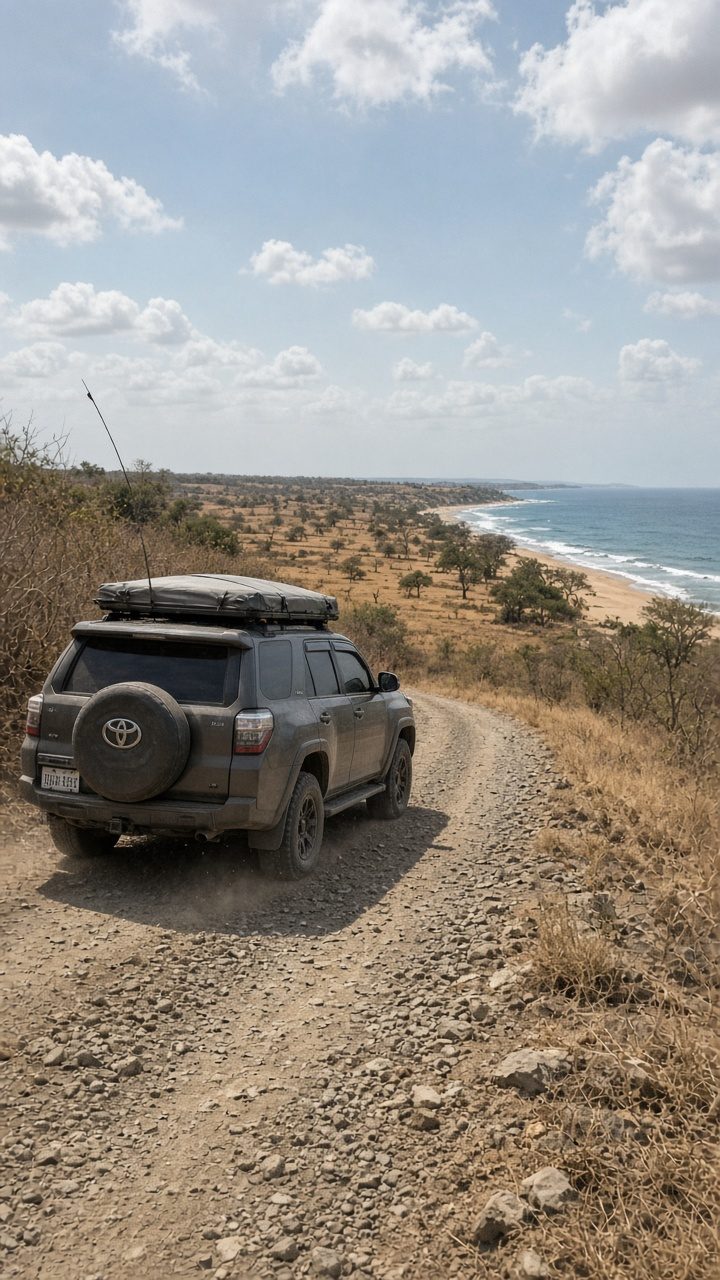
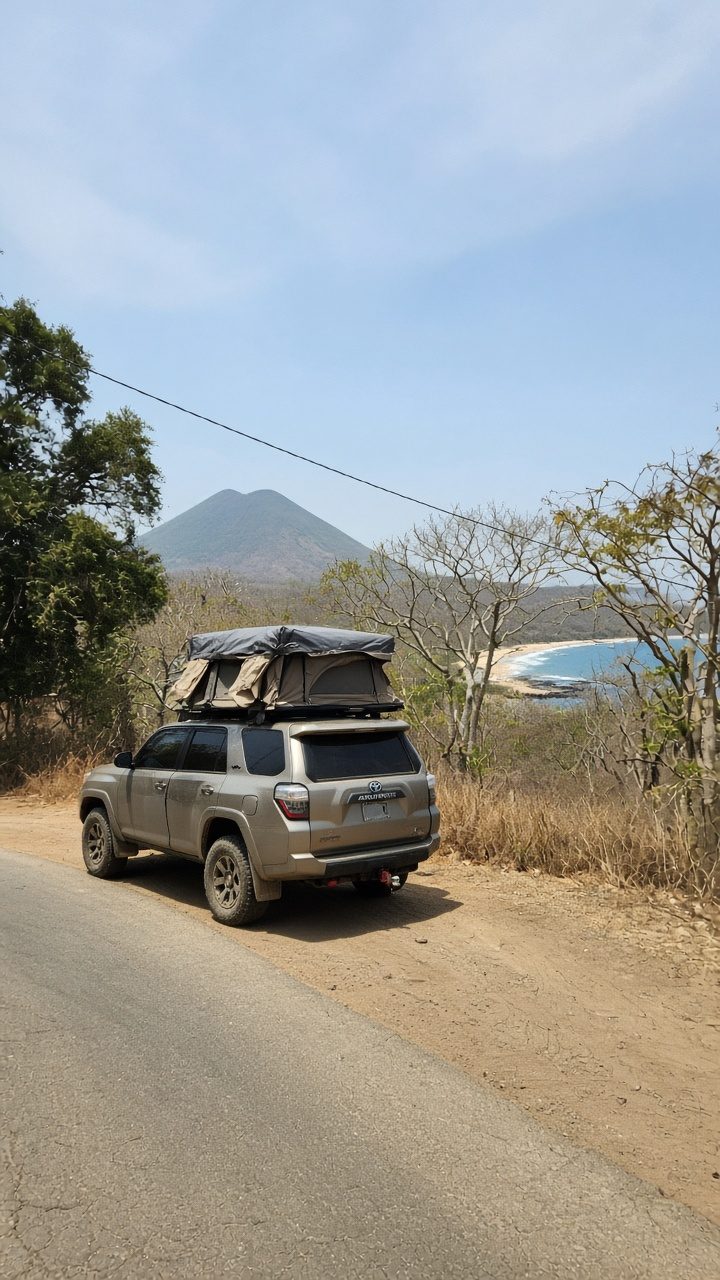
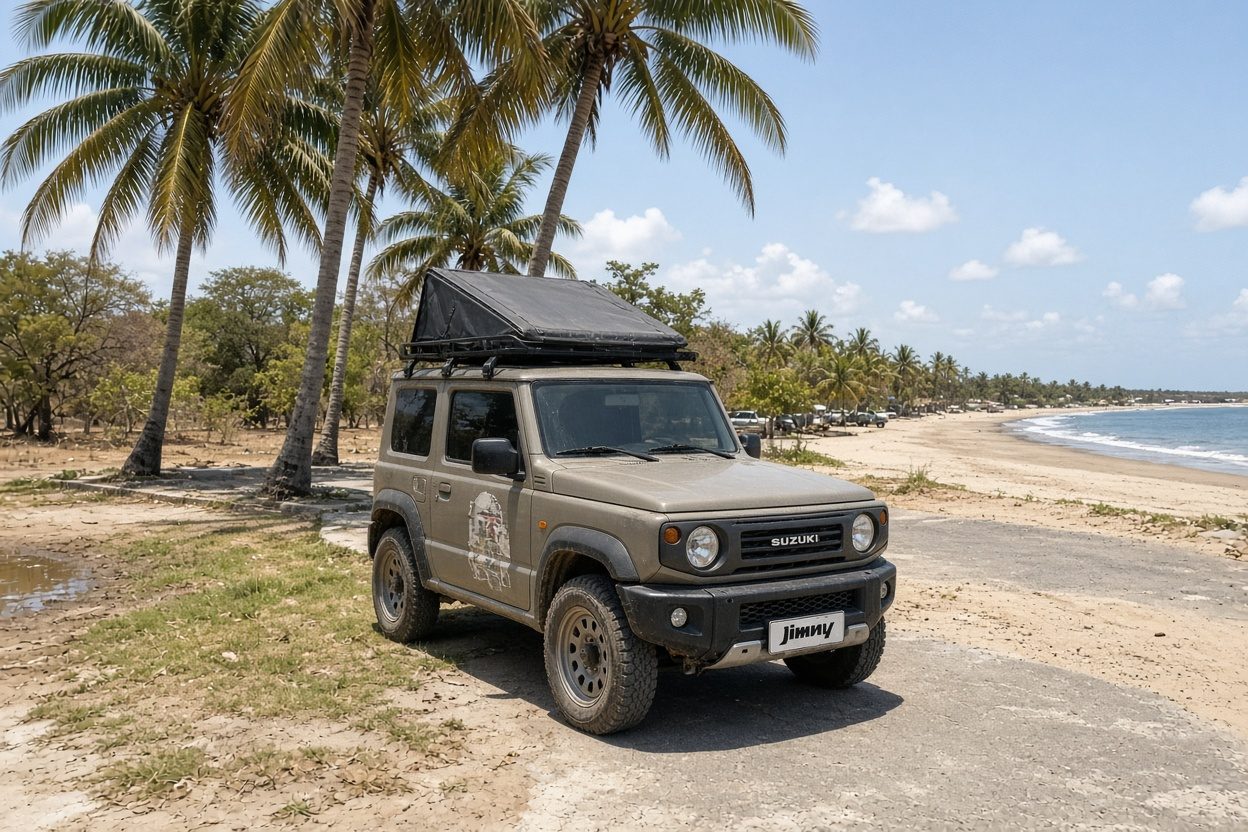
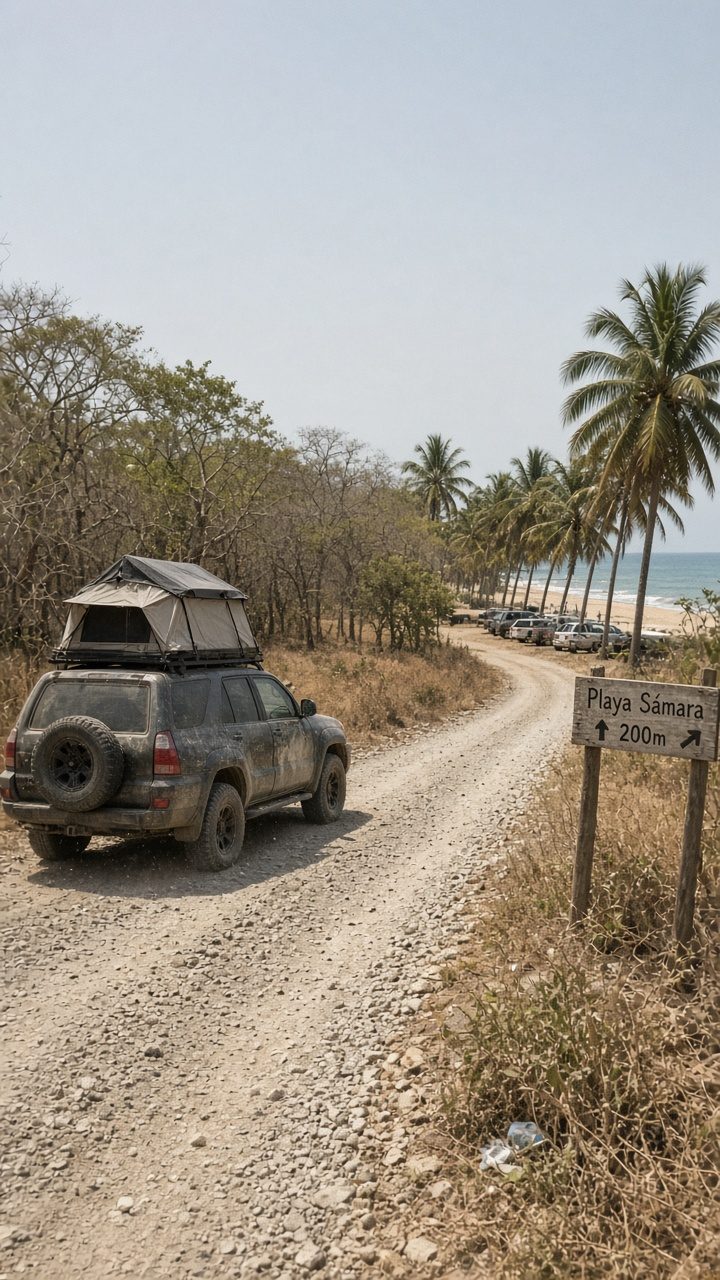
This immersion is a ferry, a dust road, and kilometers of peaks to drift between — it wants a capable mid 4x4 with clearance, a board rack for the quiver, and the option of a rooftop tent for Mal País's quiet end. Reserve your VerifiedCR overland rig and we'll handle the Paquera ferry timing as a concierge add-on, load offline maps and tide tables, and shortlist the in-town shapers and coaches. Liberia pickup, ferry across, and the whole southwest tip to yourself at dawn.
Before you go
Do you need a 4x4?
gravel sections — 2WD ok in dry season
Best window to fly
Dec–Apr (offshore, cleaner, great NW swells); May–Nov bigger SW swells, thinner crowds
Offline first
Download your route and offline maps before you leave the lot — signal drops on the best stretches.
Golden rule
Never drive at night — plan arrivals before dark, and use Waze like the locals do.
VerifiedCR · No counter surprises
What a Costa Rica rental actually costs
The number one thing that rattles first-timers is the price jumping at the counter. Here is the honest math, before you get there.
- Advertised daily rate$12–40 / day
- What the booking sites show. It is real — but it is not the whole price. Nobody pays only this.
- Mandatory liability (TPL / SLI)+$15–25 / day
- Required by Costa Rican law on every rental. Cannot be waived. This is the line the cheap ads leave off — it roughly doubles the sticker price. Budget for it.
- Collision damage (CDW)waivable
- Often $20–40/day — but you can usually decline it if your credit card includes rental coverage (Amex, Visa Signature, Chase Sapphire and others). Call your card, ask for a coverage letter, and bring it printed.
- Security hold on your card$1,000–2,500
- A hold, not a charge — released after you return the car clean. Some agencies hold more. Make sure your card has the headroom before you fly.
The verified-rig promise: when you reserve through VerifiedCR, the rig is inspection-checked and the operator is vetted — the price you are quoted is the price you pay. No mystery line items at pickup.