Most "see the turtles" trips are a single overpriced night tour bolted onto a beach resort stay. This one is built the other way around — the whole route bends to the animals. You base first at Playa Grande, one of the last significant leatherback rookeries on the Pacific, then work south to Ostional, where olive ridleys arrive in their thousands during an arribada. In between you get Nosara's beaches and estuary to fill the daylight hours, because turtle watching is a night sport and you need somewhere gentle to spend the day.
This is for the traveler who actually cares about the wildlife — who would rather stand in the dark on a red-lit beach waiting for a two-meter leatherback to haul out than tick a box. It rewards patience and punishes rigid expectations. Nesting is a natural event, not a show: some nights you'll see several turtles, some nights one, and the Ostional arribada cannot be booked in advance at all. We tell you exactly where the uncertainty lives so you can plan around it instead of being disappointed by it.
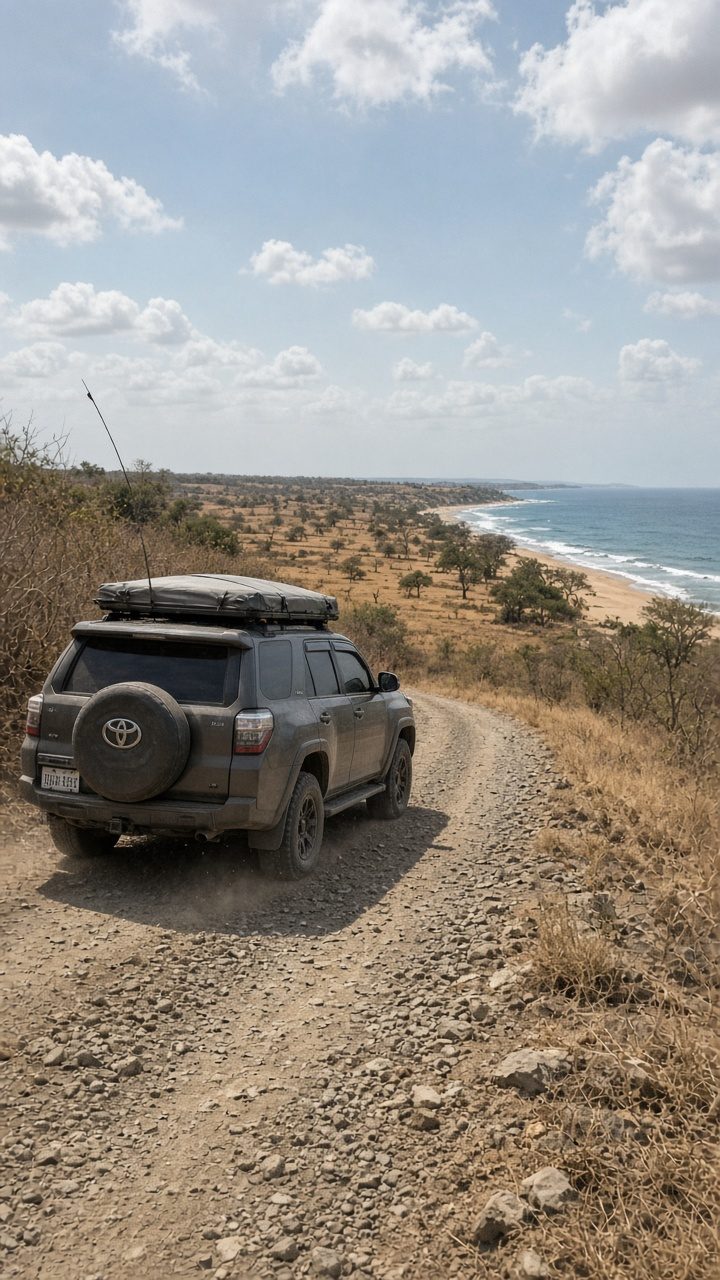
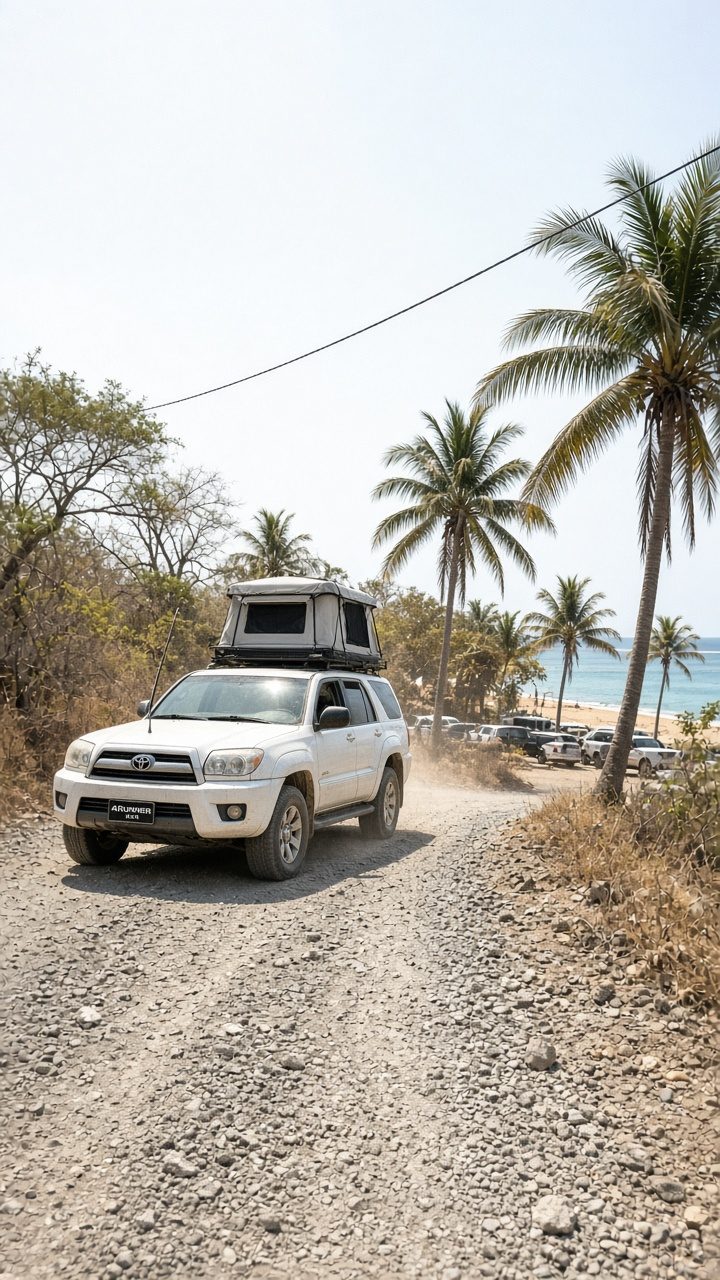
The driving is easy-to-moderate: paved 🟢 all the way to Playa Grande and most of the way south, with a genuinely rough 🟡 final stretch into Nosara. A mid 4x4 is the right rig — you want the clearance for the Nosara-area dirt and the Ostional access road, but you're not doing anything a competent 2WD-plus couldn't survive in the dry season.
Day by Day
Day 1 — Liberia (LIR) → Playa Grande (~75 km, ~1h15, paved). Pick up the rig at Liberia airport and drive southwest on Route 21, then cut to Playa Grande via Matapalo. The road is paved and undramatic. Settle in before dark and walk the beach at low light — Playa Grande sits inside Parque Nacional Marino Las Baulas, the protected nesting beach. Book your leatherback tour the moment you arrive (or before): night tours are run only with a licensed local guide and coordinated through the park/MINAE office (tel. 2653-0470); the beach is closed to unguided night walking during nesting season. Eat and sleep at the Rip Jack Inn, whose open-air restaurant is a local favorite (reservations +506 4030-2293); Hotel Las Tortugas, right at the beach entrance, is the classic turtle-focused option.
Day 2 — Playa Grande: the leatherback vigil. Spend the day quietly — the main event is after dark. Leatherback nesting runs roughly October to February, with the heart of the season in the November–January window; numbers on this beach are a fraction of what they were decades ago, so temper expectations and treat any sighting as a privilege. Tours launch in the evening and can involve a long, patient wait while spotters scan the beach; you're led out only once a female has hauled up and begun laying, to avoid disturbing her. No white light, no flash, no phones. Park entrance is around $12; the guided tour is extra. Flag: nightly turtle presence is never guaranteed — verify the current season window and tour availability directly with the park office when you book.
Day 3 — Playa Grande → Nosara (~95 km, ~2h30, paved then dirt). Drive south; the final stretch into Nosara is a rough dirt/washboard road that eats the last hour — this is where the 4x4 earns its keep, and it's slow going in the wet. Fuel up before you leave the Tamarindo area: there's a real fuel gap between Nosara and Tamarindo. Base in the Playa Guiones area. Sleep at Olas Verdes (steps from Guiones, sustainable) or The Gilded Iguana; eat in the Guiones strip.
Day 4 — Nosara → Ostional arribada window (~25 km south, dirt, tide-aware). Ostional Wildlife Refuge is the olive-ridley arribada beach. If an arribada is on, you go with a local licensed guide and follow strict rules. The critical honesty: arribadas cannot be scheduled. They peak in the rainy season (roughly August–November), tend to begin in the days around the last-quarter-to-new-moon, recur roughly monthly, and each event lasts about 3–7 days — but the timing is genuinely unpredictable, and October (this itinerary's shoulder) can hit or miss. Flag: build Ostional as a hope, not a guarantee; ask locally for daily reports and be ready to pivot to estuary/beach if nothing is arriving.
Day 5 — Nosara estuary & Playa Guiones. A recovery day. Paddle or walk the Nosara River mouth (good birding and monkeys), take a beginner surf lesson at Playa Guiones — a forgiving sand-bottom beach break — and let the yoga-town rhythm slow you down.
Day 6 — Nosara → Liberia (LIR) (~150 km, ~3h, dirt then paved). Reverse the rough section early while it's cool, then cruise Route 21 back to the airport. Give yourself a buffer; the Nosara dirt is not a road to rush.
Signature Stops
- Parque Nacional Marino Las Baulas (Playa Grande) — one of the Pacific's last leatherback rookeries; a guided night here is the whole reason for the trip.
- Ostional Wildlife Refuge — when the arribada lands, tens of thousands of olive ridleys nest at once; one of the planet's great wildlife spectacles, if the timing gifts it to you.
- Nosara River mouth & estuary — mangrove-lined, wildlife-rich, and the calm daytime counterpoint to the night vigils.
- Playa Guiones — a long, consistent beach break and Costa Rica's most beginner-friendly surf classroom.
Where to Camp / Stay
- Nights 1–2, Playa Grande: Rip Jack Inn or Hotel Las Tortugas (both walkable to the nesting beach; book ahead in season).
- Nights 3–5, Nosara/Guiones: Olas Verdes or The Gilded Iguana; Tierra Magnífica for a hillside splurge.
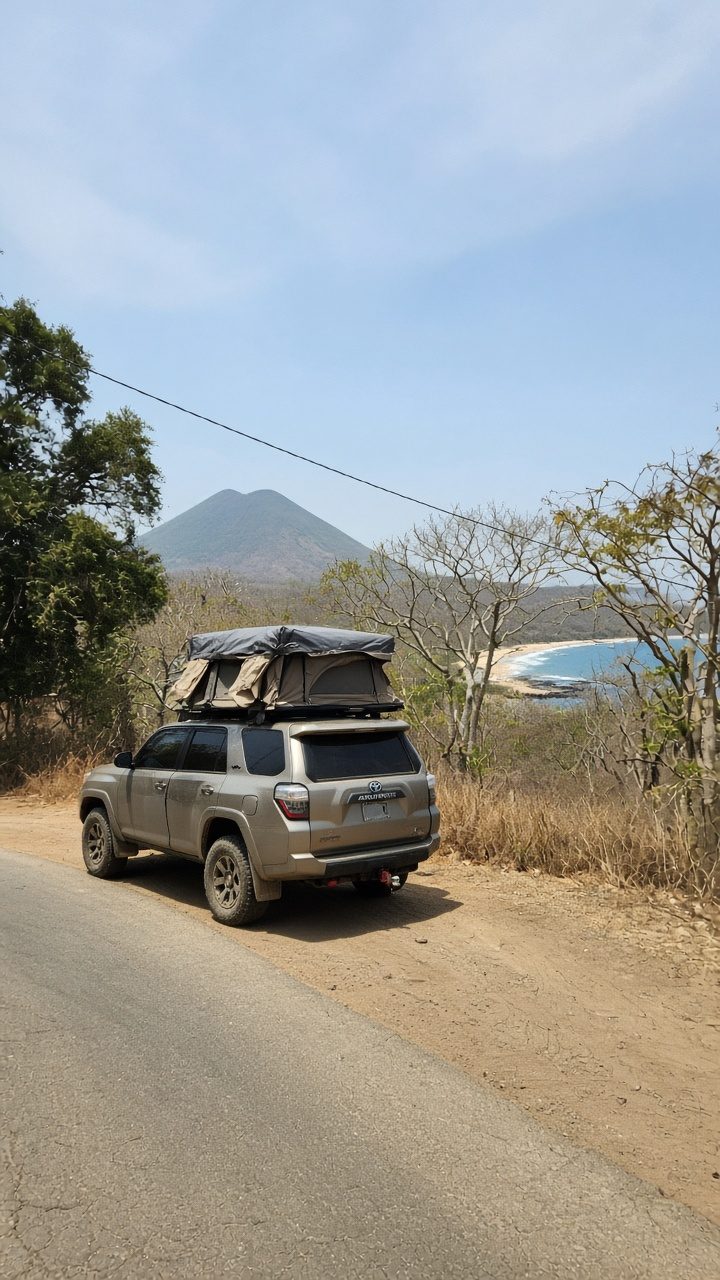
- Rooftop-tent campers: use established sites near Guiones rather than the protected nesting beaches — camping is not permitted inside Las Baulas or on the Ostional refuge beach.
Logistics & Road Reality
- Fuel: Fill up in Tamarindo/Villarreal before heading to Nosara, and again before any Sámara-direction detours. Nosara–Tamarindo is a real fuel gap.
- Roads: Paved 🟢 to Playa Grande; the last hour into Nosara is dirt/washboard 🟡 and slow in the wet. Avoid coastal river-crossing "shortcuts" — take the mapped inland routes.
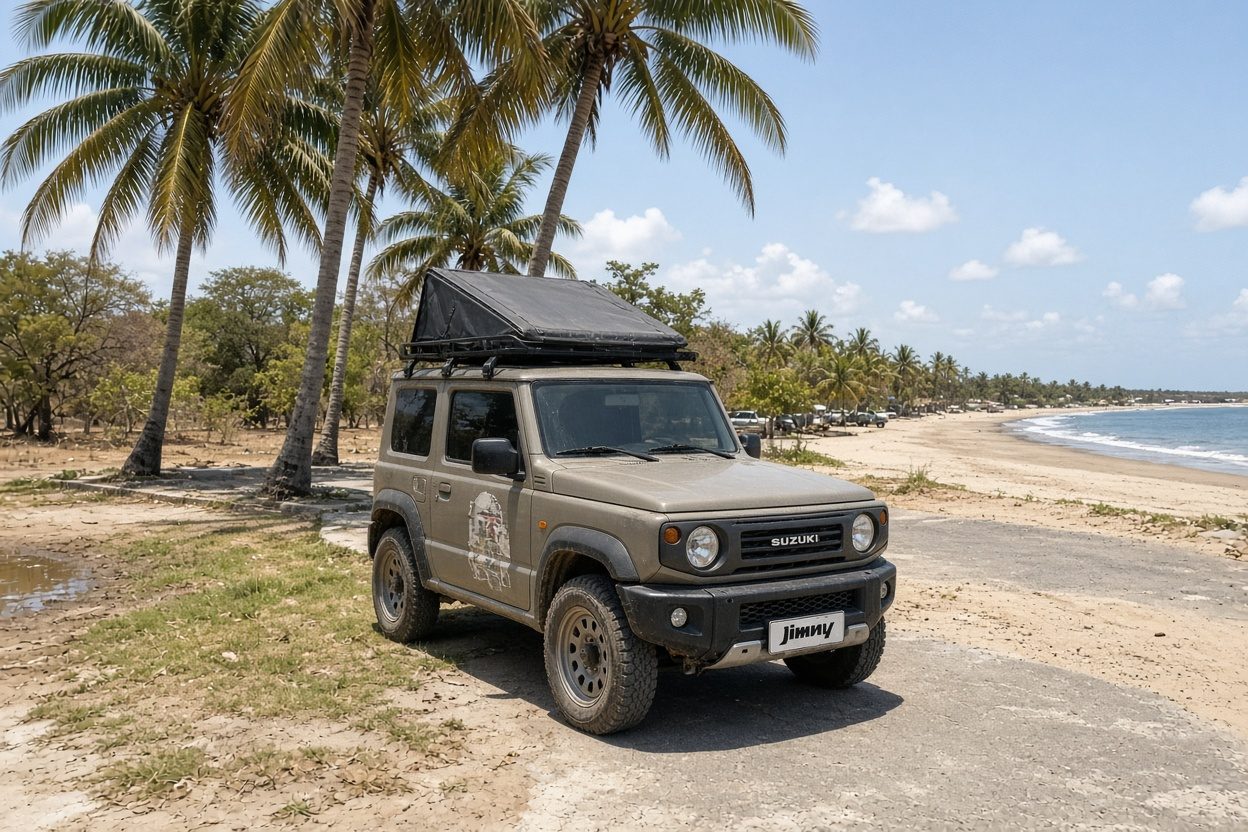
- 4x4: A mid 4x4 is recommended for the Nosara and Ostional access roads, especially outside peak dry season.
- Best season: Leatherbacks Oct–Feb (peak Nov–Jan); Ostional arribadas peak Aug–Nov. This itinerary threads both but guarantees neither.
- Permits/guides: Both turtle experiences are guided-only. Book Las Baulas tours via the park office (2653-0470); book Ostional through local guides once an arribada is confirmed.
- Connectivity: Weak-to-none on the Nosara dirt and around Ostional. Download offline maps.
- Safety: Never approach or light a nesting turtle; follow your guide exactly. Rip currents are present — swim where locals do.
Insider Tips
- Book the Playa Grande tour before you fly — spots are limited and guided-only, and walk-up availability is not something to gamble on in high season.
- Phone the Ostional community daily for arribada reports; when one starts, drop everything and go — it can be over in days.
- Bring a red-filter headlamp; white light is banned on nesting beaches and you'll want your own dim red light for footing.
- Do the rough Nosara road in daylight, both directions — the washboard is bad enough without adding darkness.
- Wear closed shoes and long layers on the beach at night: sandflies and cool wind make bare legs miserable during a long wait.
Reserve Your Rig
This route wants VerifiedCR's mid 4x4 — enough clearance for the Nosara dirt and Ostional access without over-committing. Add the offline-navigation/GPS pack and a red-light headlamp kit, and ask us to pre-arrange your licensed Las Baulas guide so your first night isn't spent chasing a booking.
Before you go
Do you need a 4x4?
gravel sections — 2WD ok in dry season
Best window to fly
Oct–Feb (leatherback nesting)
Offline first
Download your route and offline maps before you leave the lot — signal drops on the best stretches.
Golden rule
Never drive at night — plan arrivals before dark, and use Waze like the locals do.
VerifiedCR · No counter surprises
What a Costa Rica rental actually costs
The number one thing that rattles first-timers is the price jumping at the counter. Here is the honest math, before you get there.
- Advertised daily rate$12–40 / day
- What the booking sites show. It is real — but it is not the whole price. Nobody pays only this.
- Mandatory liability (TPL / SLI)+$15–25 / day
- Required by Costa Rican law on every rental. Cannot be waived. This is the line the cheap ads leave off — it roughly doubles the sticker price. Budget for it.
- Collision damage (CDW)waivable
- Often $20–40/day — but you can usually decline it if your credit card includes rental coverage (Amex, Visa Signature, Chase Sapphire and others). Call your card, ask for a coverage letter, and bring it printed.
- Security hold on your card$1,000–2,500
- A hold, not a charge — released after you return the car clean. Some agencies hold more. Make sure your card has the headroom before you fly.
The verified-rig promise: when you reserve through VerifiedCR, the rig is inspection-checked and the operator is vetted — the price you are quoted is the price you pay. No mystery line items at pickup.