Once you've stood up at Tamarindo and Guiones, the next rung on the Guanacaste ladder isn't another sand beach — it's the reefs and points that hide in plain sight just south of the beginner towns. This seven-day hunt uses Tamarindo as a familiar warm-up base, then works down the coast to Avellanas, Playa Negra, and Marbella: three breaks that reward wave-reading, tide-timing, and a pair of reef boots far more than raw fitness. It's an intermediate-to-advanced trip, tagged amber (🟡), because the driving turns to graded dirt and the bottom turns to rock.
This beats a generic surf-camp package because the whole point of Guanacaste's points is that they're tide- and swell-specific — Playa Negra's reef right only fires in a narrow window, Marbella wants mid-to-high tide and a real swell, Avellanas rearranges itself completely between tides. A camp bus can't be at three different breaks at three different tide states in one day. Your own mid 4x4 can. You surf Avellanas' sand peaks while the reefs are wrong, then slide over to Playa Negra the moment the tide fills in.
Come in the dry season (Dec–Apr) for offshore E–NE mornings and cleaner reef, or chase the bigger, more organized SW groundswell from April to October if you want the points at full power (and don't mind wetter roads). Either way, respect matters here: these are smaller, more local lineups than Tamarindo, and the reefs punish the impatient.
Day-by-day
Day 1 — LIR → Tamarindo (~70 km / 1–1.5 hr, paved). Base night and warm-up. Surf Tamarindo's forgiving beach break to shake off the flight, fit boards, and sort reef boots and a ding kit — the last reliable surf-shop cluster before the dirt. Fuel up.
Day 2 — Tamarindo → Avellanas (~15 km / 30–40 min; paved then graded dirt). Avellanas ("Little Hawaii") is the ideal step-up: a long beach with a mostly sandy bottom, multiple peaks up and down the strand, and everything from mellow inside runners to a punchy reef-sand A-frame ("El Palo"/the beach break in front of Lola's) when the swell is really pumping. It caters to all levels depending on size, which makes it the perfect place to build reef confidence on a soft floor. Best on a SW or W swell of at least 2 ft with NE–E offshore wind; surfable across tides. Eat at the famous beachfront spot, sleep at a surf lodge nearby.
Day 3 — Avellanas (consolidate). A full day to learn the beach's peaks and tides. The A-frame shifts with the sandbars; the reef corner sharpens on lower water. Two sessions bracketing the wind, midday off. This is where you confirm you're ready for Playa Negra.
Day 4 — Avellanas → Playa Negra (~20–30 min, graded dirt/rough). Playa Negra is the trip's marquee wave: a fast, hollow right-hand reef break over rock and boulders, made globally famous by The Endless Summer II. It's an intermediate-to-advanced wave — reef boots on, priority respected — that works best on a SW-to-W swell with the tide coming up from mid to high. Below head-high it's fun and makeable; overhead it barrels and the consequence is real rock. Base at a Playa Negra surf lodge (several long-running options — verify current) so you can score the tide windows without a commute.
Day 5 — Playa Negra (dawn + tide windows). Live by the tide chart. Dawn offshore session on the fill-in tide, midday rest, evening session if the tide re-aligns. Down-day alternative: paddle the mellower sand stretches or drive back to Avellanas if Negra's too heavy.
Day 6 — Playa Negra → Marbella (~30–45 min, dirt). Marbella is the advanced, low-crowd reward: a quality right-hand reef break that needs a real swell (S/SW/W, ~4 ft minimum — below that it goes flat) and mid-to-high tide, with fewer people because it's less consistent and harder to reach. When it's on, it's one of the better rights in the area; when it's small, it's a scenic non-event, so keep Avellanas in your back pocket. Camp or stay simple here.
Day 7 — Marbella → LIR (~2–2.5 hr, dirt then paved). Dawn check, then the drive back to Liberia via Rte 21. Buffer three hours for fuel and the dirt-to-pavement transition.
The breaks
- Avellanas — long, mostly-sand beach with many peaks plus a punchy reef-sand A-frame; the safest place to build reef instincts. All levels by size; the A-frame is intermediate+.
- Playa Negra — fast, hollow right over rock/boulder reef, the Endless Summer II wave; best SW–W swell, rising mid-to-high tide. Intermediate to advanced; reef boots.
- Marbella — quality right-hand reef, needs ~4 ft+ S/SW/W swell and mid-to-high tide; uncrowded because inconsistent. Advanced.
Where to stay
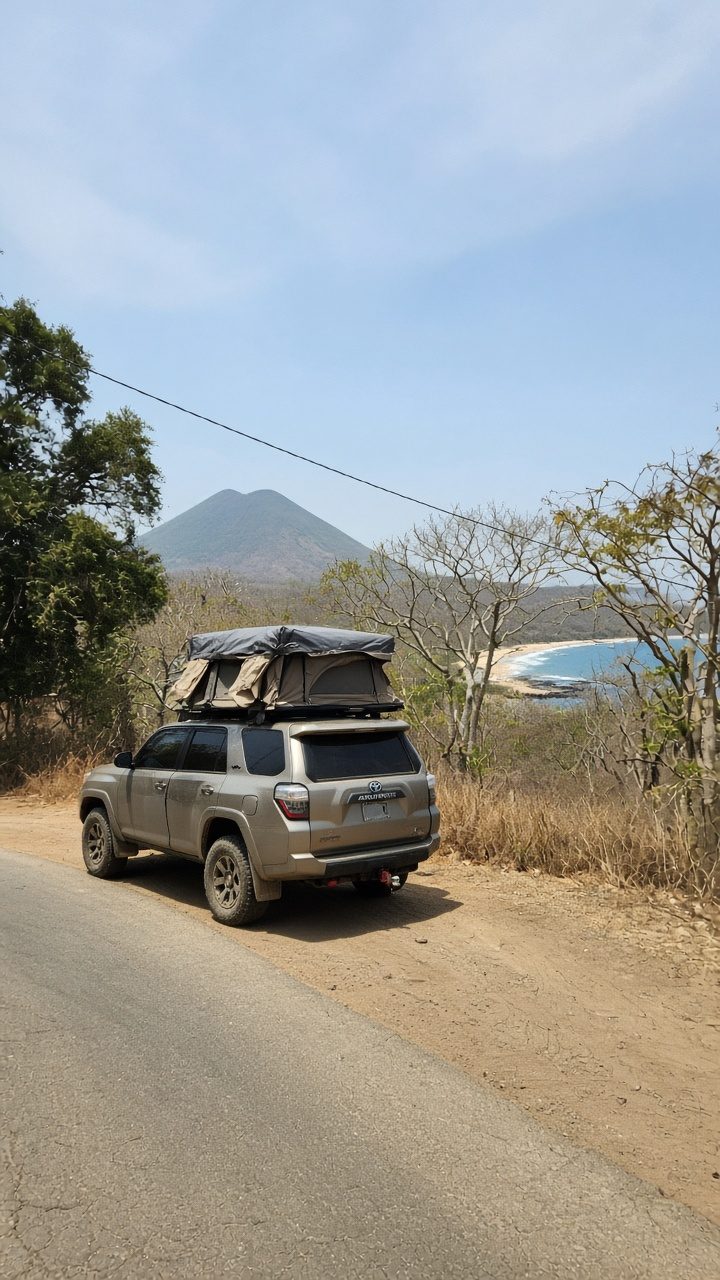
Tamarindo for the warm-up (dense lodging, last real surf shops). Avellanas and Playa Negra each have a cluster of established surf lodges and cabinas built around the breaks — book ahead in dry-season peak. Marbella is quieter and more basic; a self-contained rig shines here. Confirm rooftop-tent site legality and security locally.
Surf logistics
- Season / swell: Dec–Apr = offshore mornings, cleaner reef. Apr–Oct = bigger, more organized SW groundswell and the points at full power, but wetter, softer roads. The reefs want a real swell — flat spells make Avellanas the fallback.
- Boards: Your everyday shortboard plus a step-up for overhead reef days. Bring a ding-repair kit; there's no shop past Tamarindo.
- Tides: Playa Negra and Marbella favor the rising mid-to-high; Avellanas reshuffles across all tides. Learn each break's window before you paddle out.
- Hazards: Rock and boulder reef at Negra and Marbella — reef boots, and know the exit before the sets. Rip currents and shifting sandbars at Avellanas.
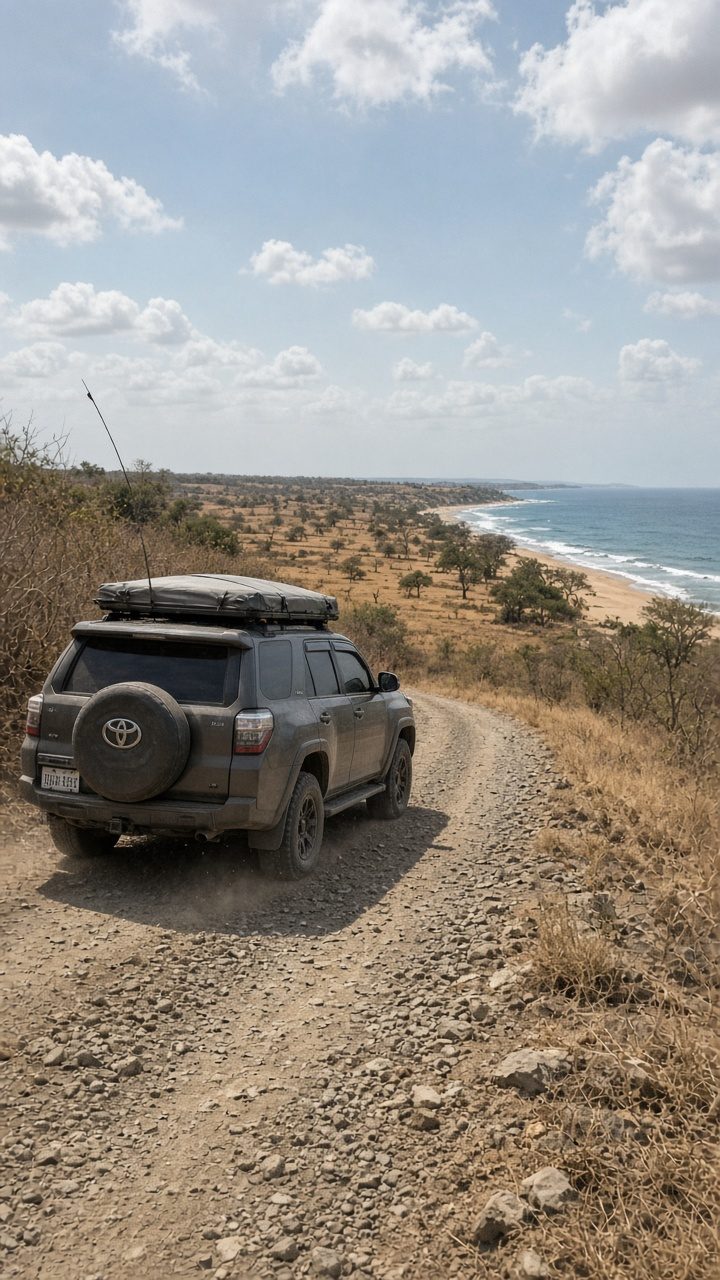
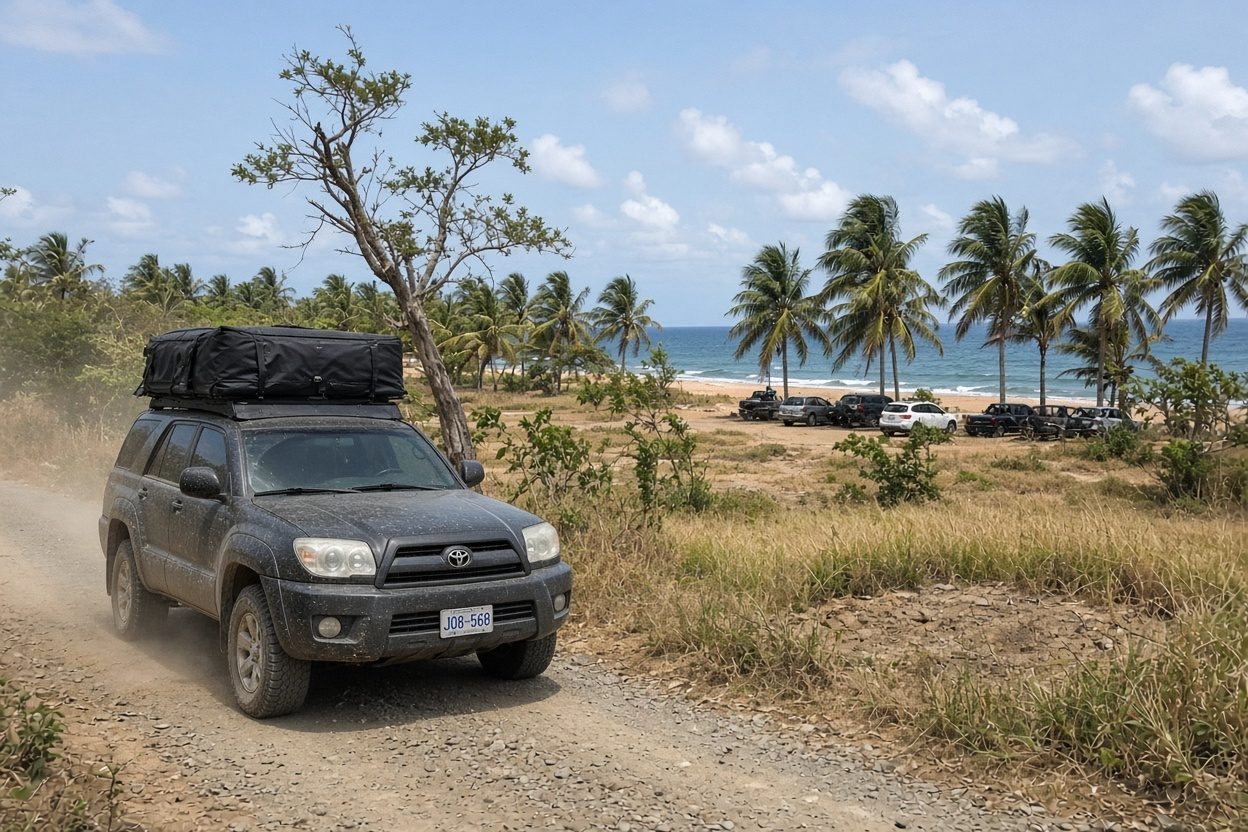
- 4x4 need / connectivity: A mid 4x4 is right — graded dirt roads that get slick and rutted in the wet. Data is patchy south of Tamarindo; download tide charts and offline maps.
- Respect / localism: Smaller, more local lineups than the beginner towns. Wait your turn, don't drop in, and don't paddle straight to the peak on your first session.
- Tag: 🟡 mostly through-land — graded dirt between breaks, worse in rain.
Insider tips
- Tide dictates the whole day. Build the schedule around Playa Negra's and Marbella's rising-tide windows, not around breakfast.
- Carry Avellanas as your flat-day insurance — it works on more tides and sizes than the reefs.
- Reef boots and a ding kit are non-negotiable past Tamarindo; the nearest replacement board is hours away.
- Earn your spot at Negra and Marbella. These are local waves — sit wide, watch a set or two, and be patient before you go.
- Fuel and cash before the dirt. Stations and ATMs cluster in Tamarindo; assume none between the points.
Reserve your rig
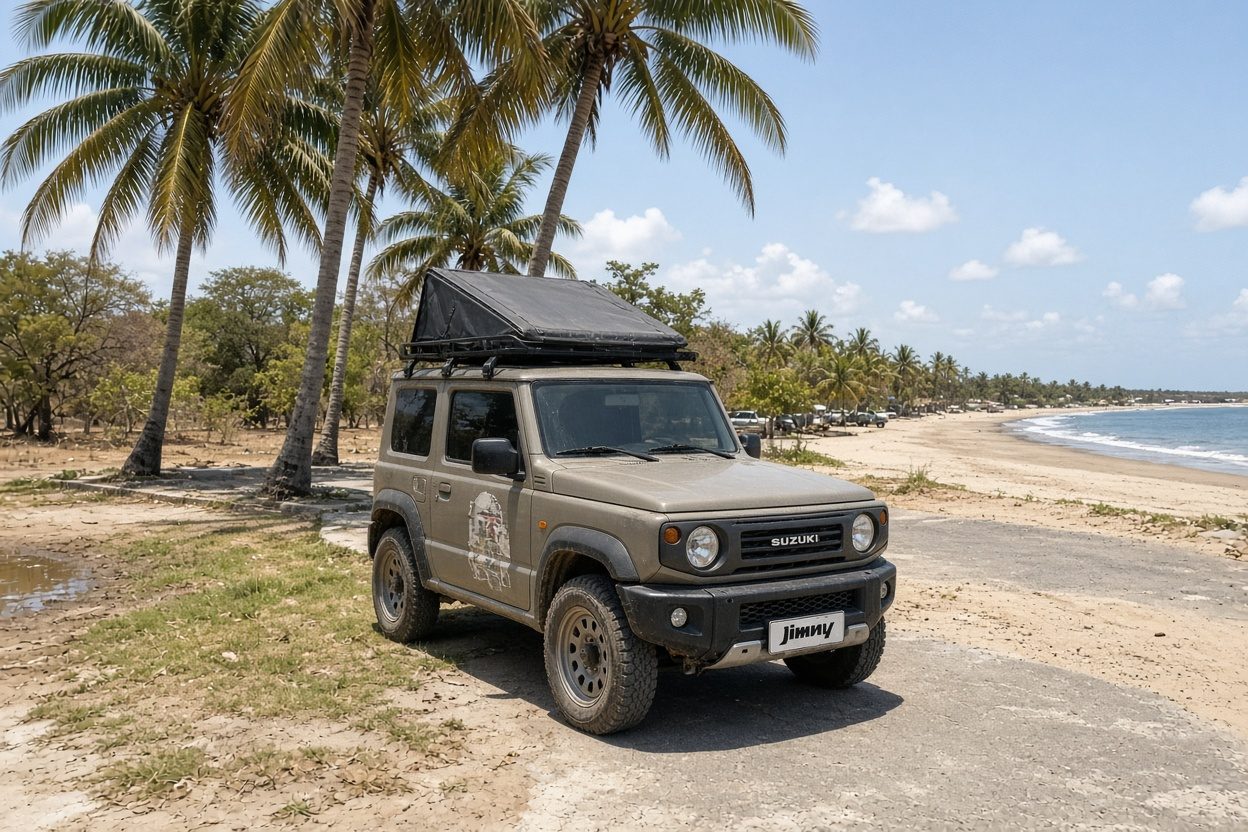
The point hunt lives on graded dirt and tide charts, so it wants a capable mid 4x4 with clearance, a board rack for your quiver, and room for reef boots and a ding kit. Reserve your VerifiedCR overland rig with a rooftop tent for Marbella's quiet end, and we'll load offline maps, tide tables, and a vetted list of the surf lodges built around each break. Liberia pickup, Liberia drop — points in between.
Before you go
Do you need a 4x4?
gravel sections — 2WD ok in dry season
Best window to fly
Dec–Apr (clean, offshore); bigger SW power Apr–Oct
Offline first
Download your route and offline maps before you leave the lot — signal drops on the best stretches.
Golden rule
Never drive at night — plan arrivals before dark, and use Waze like the locals do.
VerifiedCR · No counter surprises
What a Costa Rica rental actually costs
The number one thing that rattles first-timers is the price jumping at the counter. Here is the honest math, before you get there.
- Advertised daily rate$12–40 / day
- What the booking sites show. It is real — but it is not the whole price. Nobody pays only this.
- Mandatory liability (TPL / SLI)+$15–25 / day
- Required by Costa Rican law on every rental. Cannot be waived. This is the line the cheap ads leave off — it roughly doubles the sticker price. Budget for it.
- Collision damage (CDW)waivable
- Often $20–40/day — but you can usually decline it if your credit card includes rental coverage (Amex, Visa Signature, Chase Sapphire and others). Call your card, ask for a coverage letter, and bring it printed.
- Security hold on your card$1,000–2,500
- A hold, not a charge — released after you return the car clean. Some agencies hold more. Make sure your card has the headroom before you fly.
The verified-rig promise: when you reserve through VerifiedCR, the rig is inspection-checked and the operator is vetted — the price you are quoted is the price you pay. No mystery line items at pickup.