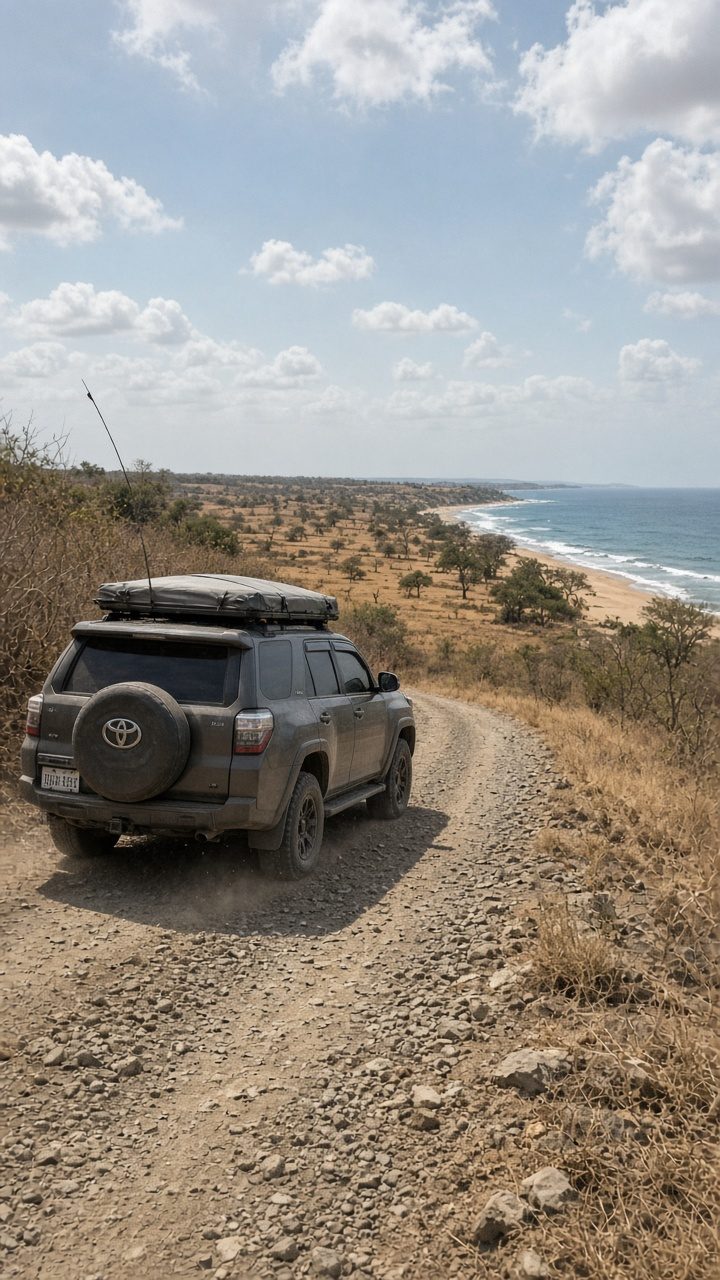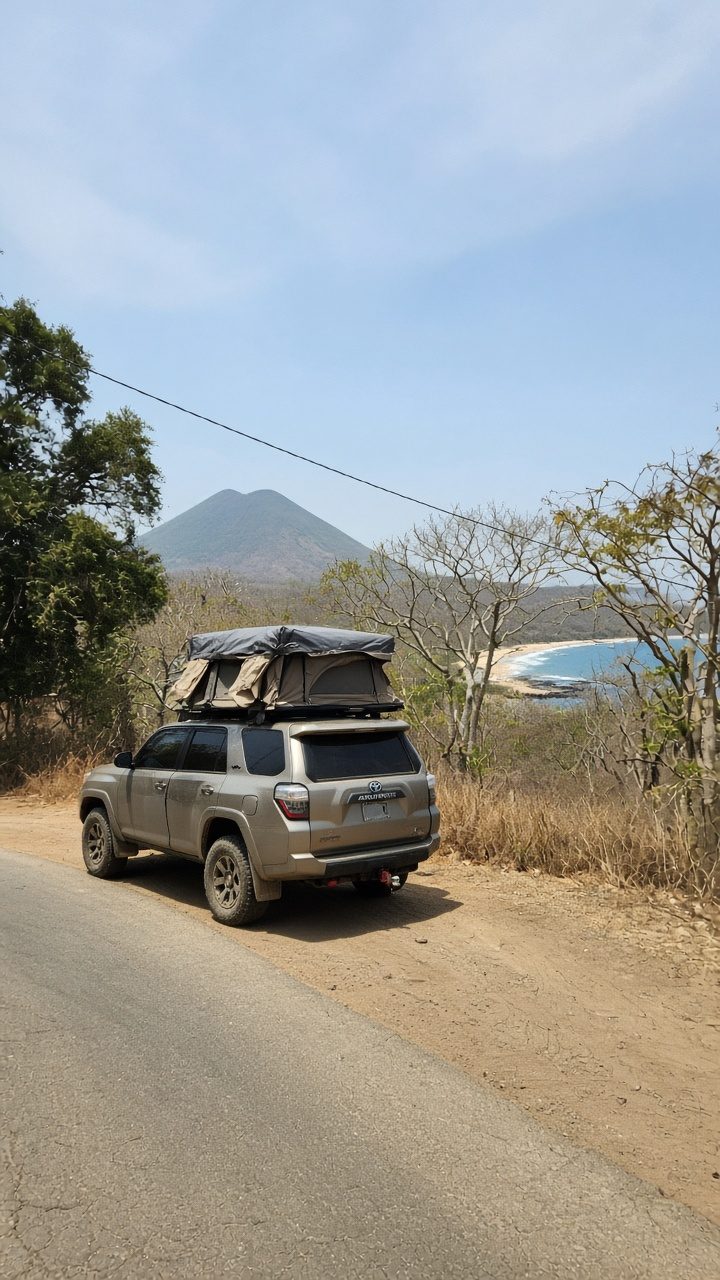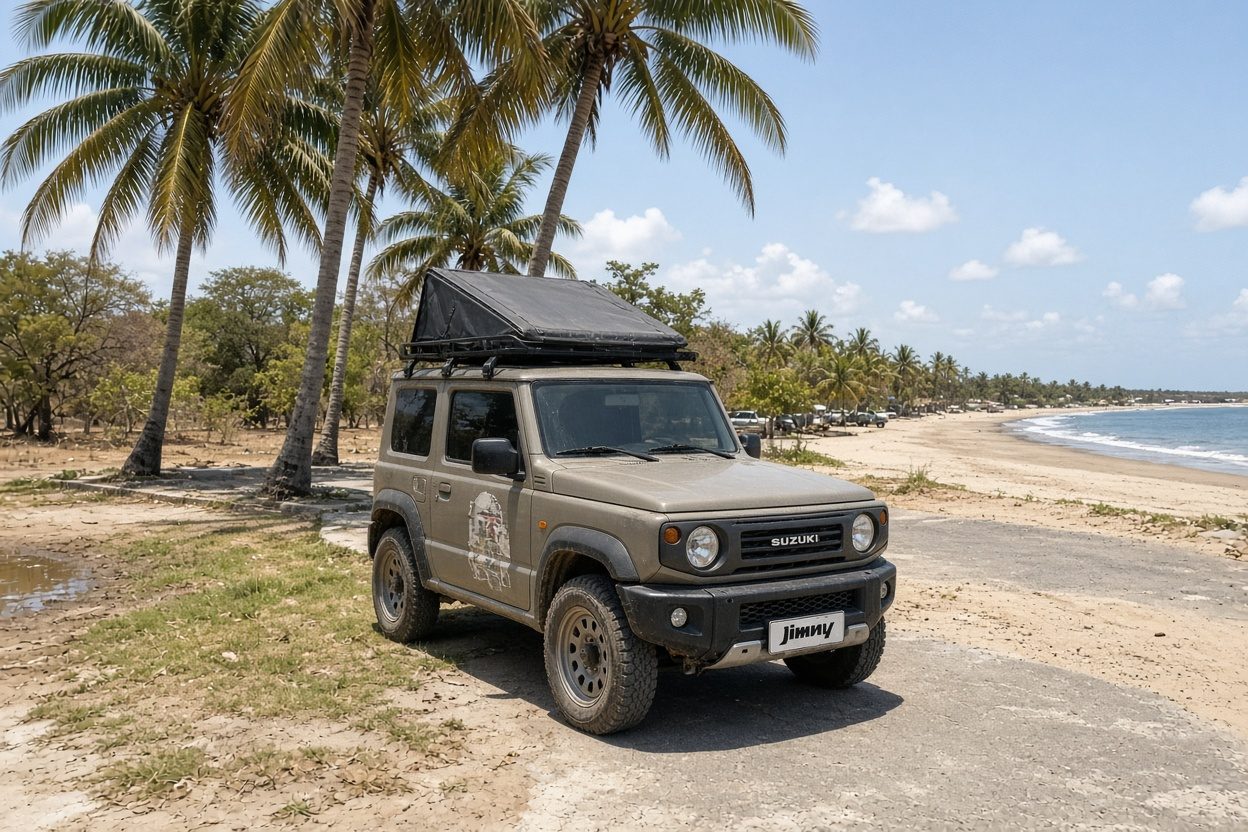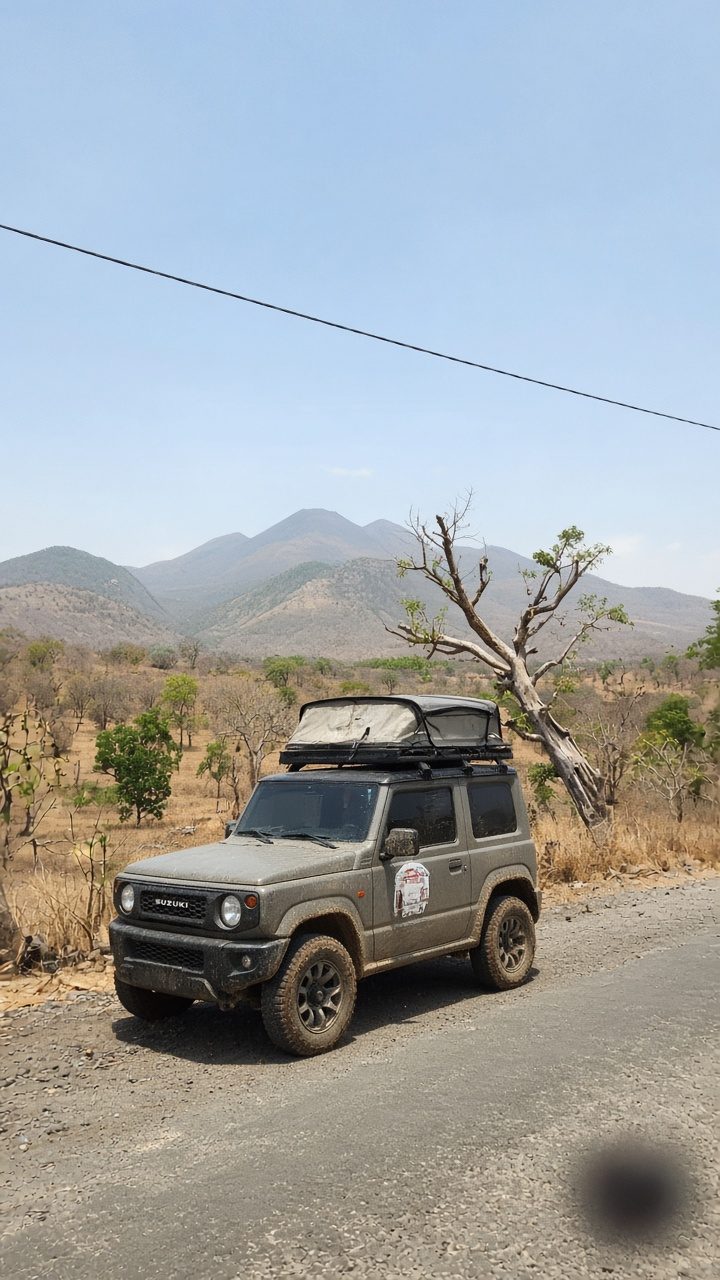
The Nicoya Peninsula is where most people in Costa Rica catch their first wave, and for good reason. The marquee beginner beaches here break over sand rather than rock or reef, the water sits in the mid-to-high 70s°F all year, and the whitewater rolls in with the patience of a good instructor. This 7-day loop strings together four of the most forgiving, most-taught beaches on the coast — Tamarindo, Playa Grande, Playa Guiones in Nosara, and Sámara — on a route that is overwhelmingly paved and low-stress.
This is a 🟢 itinerary by design. You'll base out of Liberia (LIR), never drive more than a couple of hours in a day, and spend your energy on dawn patrols and afternoon naps rather than white-knuckle river crossings. A compact 4x4 with a board rack is all you need; the only genuinely rough stretch is the final descent into Nosara. Come in the dry season (Dec–Apr) for glassy mornings and dependable offshore-to-light wind, though the beginner peaks work all year.
Below, each day is built around the classic surf rhythm: an early session before the wind comes up, a slow midday, and a lighter afternoon session near sunset. Where a business isn't verified we've kept it generic — use the local surf schools and your rig's provisioning to fill in the gaps.
Day-by-day
Day 1 — LIR → Tamarindo (~65 km / 1–1.5 hr, paved Rte 21 + local roads). Land at Liberia, pick up the rig, and roll straight to Tamarindo on smooth pavement. Tamarindo's main beach is the country's beginner factory: a long, sand-bottom beach break with a gentle inside reform that surf schools have taught on for decades. Spend the afternoon getting fitted for a soft-top, walk the town's restaurant strip for a first fish taco or casado, and sleep in one of the many in-town surf lodges or a beachfront campsite. Fuel up here — stations are plentiful now but thin out south.
Day 2 — Tamarindo + Playa Grande (short hops, mostly paved). Dawn-patrol Tamarindo's inside on the rising tide, then cross the estuary mouth to Playa Grande — protected within Las Baulas Marine National Park — for a longer, more open beach break with fewer crowds and cleaner walls once you're standing up. Note the estuary is tidal and current-prone; don't try to swim or paddle it, drive around. Lunch back in Tamarindo, second session at golden hour.
Day 3 — Tamarindo / Playa Grande (skills day). A full day to consolidate. Morning lesson on your weaker turn, midday flat-water paddle practice, and a sunset longboard at Playa Grande, which faces the setting sun and empties out beautifully. This is a good day to book a "verified surf-school" half-day if you want coaching video.
Day 4 — Tamarindo → Nosara / Playa Guiones (~2.5–3.5 hr; last ~30–45 min unpaved). The drive south is the day's adventure: the Nosara approach still finishes on washboard dirt (🟡), so top off fuel before you leave the Tamarindo–Nosara stretch — service is sparse. Playa Guiones is the beginner-to-intermediate jewel of the peninsula: a wide, consistent sand-bottom beach break with multiple peaks that spread the crowd, best surfed around mid-to-low tide. Settle into a Guiones surf camp or wellness-leaning lodge and hit the evening session.
Day 5 — Nosara / Guiones (surf + reset). Dawn is the prize at Guiones — lightest wind, cleanest faces. Surf, refuel with a smoothie bowl, and take the afternoon slow; Nosara is a Blue Zone wellness hub, so a yoga class or beach walk pairs naturally with the surf. Optional trip to the Nosara river mouth or nearby Playa Pelada tide pools at low water.
Day 6 — Nosara → Sámara (~1–1.5 hr, mixed paved/graded). Sámara is the peninsula's mellowest surf town: a horseshoe bay partly shielded by an offshore reef, so the beach break is smaller and softer — ideal for a confidence-building last full day and for anyone still finding their feet. Paddle out front, then paddle or walk to the calmer corners. Sámara's town is walkable, safe, and full of sodas; sleep beachfront.
Day 7 — Sámara → LIR (~2–2.5 hr, mostly paved). One short dawn session if the tide cooperates, then the easy paved run back to Liberia for your flight. Build in a fuel and buffer stop; give yourself 3 hours before departure.
Signature stops (why go)
- Tamarindo beach break — the most-taught wave in Costa Rica; sand bottom, endless whitewater, instant gratification.
- Playa Grande — the grown-up version next door: longer walls, fewer people, a protected national-park beach and a sunset that faces you.
- Playa Guiones (Nosara) — the peninsula's most reliable all-round beach break, with enough peaks to never feel crowded.
- Sámara Bay — reef-sheltered and gentle; the softest landing on the whole coast.
Where to camp / stay
Tamarindo and Nosara both have dense clusters of surf camps, hostels with board storage, and beachfront lodges; book Guiones ahead in dry-season peak (Dec–Apr). Sámara has family-friendly beachfront cabinas and campgrounds close to the sand. If you're running the rooftop tent, confirm each site's legality and security before you commit — Guiones and Sámara have established, guarded options (verify current operators locally).
Logistics & road reality
- Fuel 🔴: The Nosara–Tamarindo and Sámara–Santa Teresa corridors are the classic Nicoya fuel gaps. Fill up in Tamarindo, Nicoya town, and Sámara whenever you pass a station.
- Roads 🟡: The route is ~90% paved. The exception is the final descent into Nosara/Guiones, which stays graded dirt/washboard — a compact 4x4 handles it dry; it gets slick in rain.
- Season 🟢: Dry season (Dec–Apr) = cleanest surf and easiest driving. The beginner peaks break all year, but green-season afternoons bring rain and the dirt roads soften.
- Connectivity: Good cell/data in Tamarindo, Nosara and Sámara; patchy on the drives between.
- Safety: Watch estuary mouths (Tamarindo and Nosara rivers) — currents and crocodiles; surf the open beach, not the river. Lock the rig and never leave boards or bags visible.
Surf guidance (beginner)
- Skill level: All four beaches suit never-surfed to early-intermediate. Progression order in this itinerary is deliberate: Tamarindo (learn) → Guiones (build) → Sámara (soft finish).
- Boards: A soft-top 7'6"–8'0" or a longboard for week one; the rig's board rack lets you carry two so you can trade up as you improve.
- Tides: Guiones is best around mid-to-low tide; Tamarindo's inside reform works on the push. Ask locally each morning — Nicoya tides swing several feet.
- Season/swell: Dry-season (Dec–Apr) offshore mornings are ideal for learning. The bigger, more powerful SW swells arrive Apr–Oct — great for intermediates, occasionally too much for true beginners, so size down expectations after April.
- Hazards: Rip currents pull off the beach at all four spots, strongest at the ends and near river mouths. Surf near a school or lifeguard, and paddle in if you're being carried out.
Insider tips
- Dawn is everything on Nicoya. Wind comes up mid-morning; the glassy window is roughly sunrise to 9 a.m. Bring a coffee kit and be wet by first light.
- Refuel on a schedule, not on a warning light. Treat every station between Tamarindo and Sámara as your last one.
- Time the Nosara drive for daylight and dry weather — the dirt approach is fine at midday and miserable in the dark or heavy rain.
- Use tide, not the clock. Ask your surf school for the day's tide-based session window; it changes ~50 minutes daily.
- Sámara last, not first. Its gentle bay is the best place to end the week feeling like a surfer, not to start where the wave barely pushes you.
Reserve your rig
This is a route built for a nimble, board-ready 4x4 — paved highways, one dirt descent, and a lot of dawn drives to empty peaks. Reserve your VerifiedCR overland rig with a board rack and a rooftop tent, and we'll add the dawn-patrol coffee kit and a vetted "verified surf-school" shortlist for each beach. Pick it up at Liberia, drop it at Liberia, and spend the week surfing instead of shuttling.
Before you go
Do you need a 4x4?
seasonal river ford — 4x4 advised
Best window to fly
Dec–Apr (dry); reliable beginner surf year-round
Offline first
Download your route and offline maps before you leave the lot — signal drops on the best stretches.
Golden rule
Never drive at night — plan arrivals before dark, and use Waze like the locals do.
VerifiedCR · No counter surprises
What a Costa Rica rental actually costs
The number one thing that rattles first-timers is the price jumping at the counter. Here is the honest math, before you get there.
- Advertised daily rate$12–40 / day
- What the booking sites show. It is real — but it is not the whole price. Nobody pays only this.
- Mandatory liability (TPL / SLI)+$15–25 / day
- Required by Costa Rican law on every rental. Cannot be waived. This is the line the cheap ads leave off — it roughly doubles the sticker price. Budget for it.
- Collision damage (CDW)waivable
- Often $20–40/day — but you can usually decline it if your credit card includes rental coverage (Amex, Visa Signature, Chase Sapphire and others). Call your card, ask for a coverage letter, and bring it printed.
- Security hold on your card$1,000–2,500
- A hold, not a charge — released after you return the car clean. Some agencies hold more. Make sure your card has the headroom before you fly.
The verified-rig promise: when you reserve through VerifiedCR, the rig is inspection-checked and the operator is vetted — the price you are quoted is the price you pay. No mystery line items at pickup.