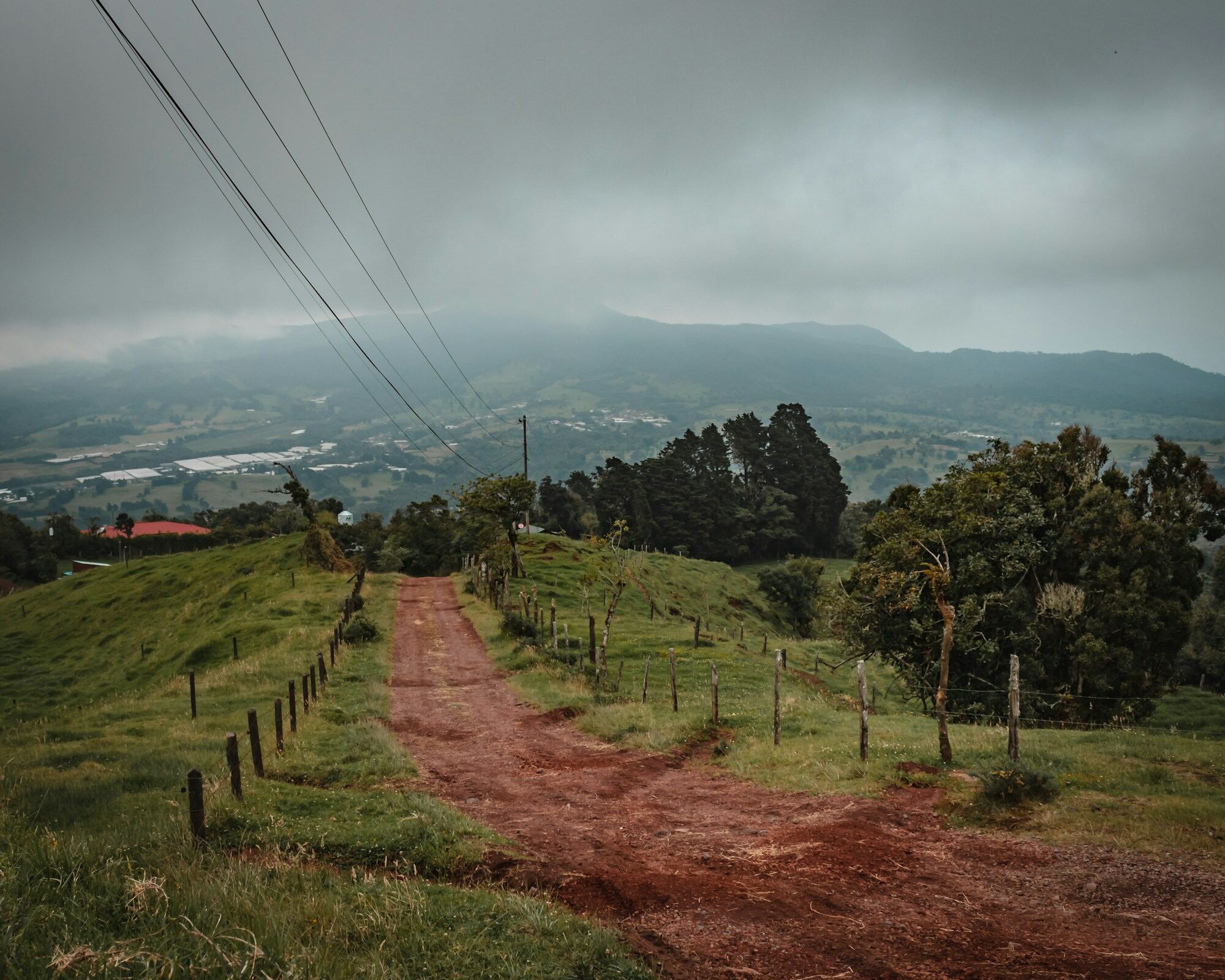
Short answer: yes, driving in Costa Rica is safe for most visitors — but it is not like driving in the United States. The roads are narrower, the rain is heavier, the signage is thinner, and a two-lane highway can drop to a single-lane bridge without much warning. If you drive defensively, avoid the highways after dark, and know a few local rules, you will be fine. This guide covers exactly what changes when you get behind the wheel here, whether you actually need a 4x4, how your U.S. license works, what a police stop looks like, and the two windshield stickers every legal car must display.
Is it safe to drive in Costa Rica?
Yes — with caveats you can plan around. Costa Rica's traffic-fatality rate is higher than the U.S. average, and almost all of that risk is concentrated in a few avoidable situations: driving at night on unlit rural roads, driving too fast for wet conditions, and passing on blind curves. None of those are forced on you. Daytime driving on the main routes, at a calm pace, is comfortable for a first-time visitor.
The two biggest mindset shifts for an American driver:
- You are sharing the road with everyone. Motorcycles split lanes, cyclists and pedestrians use the shoulder (or the lane, if there is no shoulder), and livestock or dogs appear on rural roads. Scan constantly.
- Conditions change fast. Smooth pavement turns to potholes, a paved road turns to gravel, and a dry road turns to a river crossing — sometimes within the same kilometer. Speed is the one variable you control; keep it moderate.
How driving in Costa Rica differs from the U.S.
Roads and potholes
Main highways (like the Pan-American / Ruta 1) are paved and generally decent, but even good roads have sudden potholes deep enough to damage a wheel. Secondary and rural roads range from patchy asphalt to graded dirt. Locals often flash their headlights or wave a hand out the window to warn you of a hazard, a police checkpoint, or a problem ahead — treat any such signal as "slow down."
Signage and navigation
Signage is sparse and street addresses are informal (directions are commonly given as "200 meters south of the church"). Download offline Google Maps or Waze before you go — Waze is widely used in Costa Rica and handles the local road network well — because cell coverage disappears in the mountains and along the coast.
Night driving
Avoid driving at night outside cities if you can. Rural roads are unlit, lane markings fade, pedestrians and cyclists are hard to see, and animals wander onto the road. What is an easy 90-minute drive by day becomes genuinely hazardous after dark. Plan arrivals before sunset (around 5:30–6:00 pm year-round, since Costa Rica is near the equator).
Rainy season
From roughly May to November, expect heavy afternoon downpours. Rain reduces visibility to near zero for short bursts, floods low crossings, and turns dirt roads to mud. Rivers rise quickly — never drive into moving water if you can't see the bottom. If a downpour is blinding, pull off safely and wait it out; these storms are usually brief.
One-lane bridges (puentes de un solo carril)
Many bridges — even on busy routes — are a single lane shared by both directions. A "CEDA EL PASO" (yield) sign tells you which direction must give way. If you face the yield sign, stop and let oncoming traffic clear before you cross. If you don't, you have priority — but confirm the other side is actually stopping before you commit.
River crossings
On the back roads to some beaches and lodges, the "bridge" is just the river. These crossings are why rental agencies push 4x4s. If you're not sure of the depth, wait and watch a local vehicle cross first, or don't cross at all.
Do you need a 4x4?
It depends entirely on where you're going — not on Costa Rica in general.
- You do NOT need a 4x4 for San José, the Central Valley, the airports, the main highways, or well-developed beach towns reached by paved road (much of Guanacaste's main resorts, Jacó, Manuel Antonio, La Fortuna/Arenal town).
- You DO want a 4x4 for the Nicoya Peninsula back roads (Santa Teresa, Mal País, Nosara in green season), Monteverde's unpaved approaches, the Osa Peninsula, remote mountain lodges, and anywhere involving river crossings or steep dirt in the rainy season.
A useful rule: if your destination's own directions mention "high clearance," "4x4 recommended," or "river crossing," believe them and rent the 4x4. A standard car with low clearance will strand you on exactly the roads that lead to the best places. When in doubt in green season, size up.
Can you drive on a U.S. license?
Yes. Tourists can legally drive in Costa Rica on a valid U.S. driver's license for up to 90 days, matching the standard tourist entry stamp. You do not need an International Driving Permit, though carrying one alongside your license doesn't hurt. Your license stays valid only as long as your legal tourist status does — if you overstay or your entry stamp lapses, so does your right to drive on the foreign license.
If you become a resident, you're expected to convert to a Costa Rican license. For a normal vacation, your home license and your passport (or a copy of it and your entry stamp) are what you carry.
Police stops and checkpoints
Routine police checkpoints ("retenes") are normal and usually harmless — traffic police (Tránsito) check documents, especially on weekends and near borders. Here's how to handle one:
- Stay calm, stay in the car unless asked, and have your documents ready: your driver's license, your passport or a copy with your entry stamp, and the car's papers (the rental company provides these; if you own the car, the registration).
- Fines are issued by ticket, not paid on the spot. A legitimate officer writes a citation you settle later (a rental agency can handle it, or you pay at a bank/INS). Be wary of any request for cash on the roadside — asking to pay a fine in cash directly to an officer is a red flag. Politely insist on the official ticket.
- Speed limits are posted in km/h and enforced by radar and cameras. Common limits: ~80–100 km/h on highways, 40–60 km/h on secondary roads, 25 km/h in school zones.
- Seatbelts are mandatory, phone use while driving is prohibited, and Costa Rica has strict drunk-driving laws. Don't drink and drive — penalties are severe.
The two stickers every legal car must display: marchamo and RTV
Look at the windshield of any Costa Rican car and you'll see two stickers. They aren't decoration — they're proof the car is legal to be on the road, and they matter whether you're renting or thinking about buying.
- Marchamo — the annual road tax and mandatory insurance, issued by INS (the national insurer). Every car must pay it; the payment window runs each year from early November through December 31. A current marchamo sticker means the car's road tax and basic liability coverage are paid up. An expired or missing marchamo means the car isn't legal to drive.
- RTV / DEKRA — the mandatory periodic roadworthiness inspection (formerly "Riteve," now run by DEKRA). It certifies brakes, lights, emissions, and safety. The sticker shows the month the car passed and when it's due again.
If you rent, glance at both stickers before you drive off — a reputable agency keeps them current. If you're buying a car in Costa Rica, these two records are the first things to verify, because unpaid marchamo, inherited traffic fines, and a lapsed RTV all transfer with the vehicle, not the previous owner.
Verify any car before you buy — free
If you're moving past renting and thinking about buying a car here, you don't have to take a seller's word for the car's status. You can check any Costa Rican license plate for free and get a plain verdict on what the official registries say — whether the road tax (marchamo) is current, the RTV inspection is valid, there are outstanding traffic fines, or liens on the title.
→ Run a free plate check before you pay anyone a deposit. It's the fastest way to catch a car that looks fine on the windshield but has problems in the registry. If you want to browse cars that have already been checked, see the marketplace.
FAQ
Is driving in Costa Rica safe for tourists? Yes, for daytime driving on the main routes at a moderate speed. The real risks — unlit night roads, wet-weather speed, and blind-curve passing — are all avoidable. Drive defensively, arrive before dark, and slow down in the rain.
Can I use my U.S. driver's license in Costa Rica? Yes, for up to 90 days as a tourist, as long as your license and your entry stamp are both valid. You don't need an International Driving Permit.
Do I really need a 4x4? Only for specific destinations — remote beaches, Monteverde, Osa, mountain lodges, and river crossings, especially in the May–November rainy season. For cities, main highways, and paved beach towns, a standard car is fine.
What are the two stickers on the windshield? The marchamo (annual road tax + mandatory insurance from INS) and the RTV/DEKRA roadworthiness inspection sticker. Both must be current for the car to be legal.
What do I do at a police checkpoint? Stay calm, show your license and passport (or entry-stamp copy) and the car's papers. Fines come as an official written ticket you pay later — never hand cash directly to an officer.
Is night driving dangerous in Costa Rica? It's the single riskiest thing you can do here. Rural roads are unlit with faded markings, pedestrians and animals are hard to see, and hazards appear late. Plan to be off the highways by dusk.
When is the rainy season and how does it affect driving? Roughly May to November, with heavy afternoon downpours. Expect flooded crossings, muddy dirt roads, and brief zero-visibility bursts. Never cross moving water you can't see the bottom of.